The City of Bezim- design and map
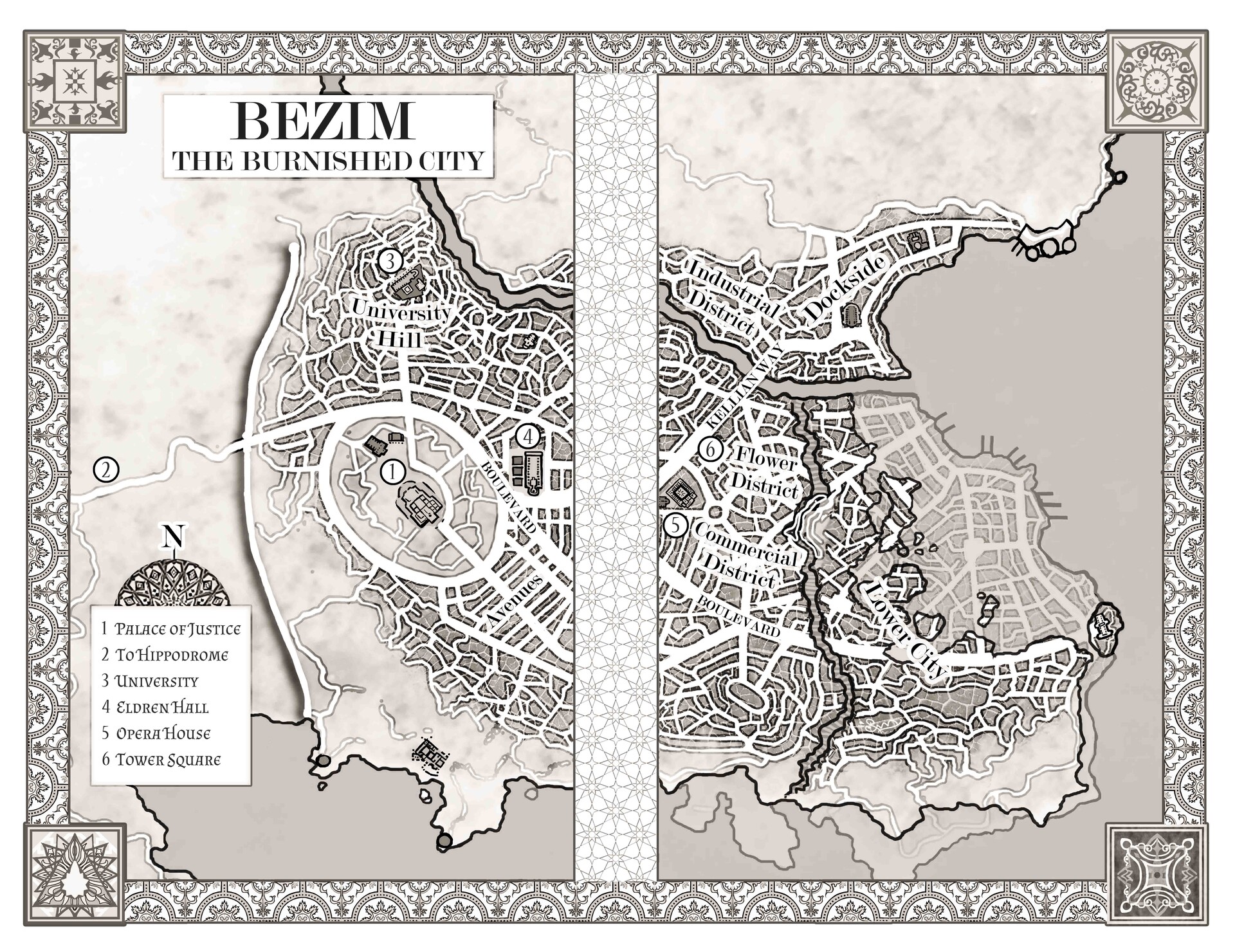
The city of Bezim, for Davinia Evan's book, "The Notorious Sorcerer". https://www.goodreads.com/en/book/show/59650738-notorious-sorcerer
I really enjoyed this project, especially since I was able to collaborate closely with Dee in the early stages of the city design.
I wanted Bezim to have a strong design aesthetic whilst remaining functional. Bezim also has a very distinguishing feature in that it suffered a magical catastrophe which cast large sections of the city into the sea (and led to the banning of magic, a major aspect of the plot).
So, I designed the old city as it would have been prior to the earthquake, and then the new city as it would have adapted with a suddenly altered proximity to the ocean. Much of this concept was strong in Dee's creation, so it was a very collaborative process where I made offers to her and we went from there.
verything was thoroughly worked out (in tandem with the author, Davinia) to ensure that Bezim not only looks good, but also works. Much like on the Blackwater city design (available to see in my portfolio), I put a lot of focus on functionality, so that the history of the city is visible in the patterns of growth and decay, where new roads and districts have formed and how. Cities are the fingerprint of civilisations, they tell the life story of the people who settled and survived. I feel that it takes a lot of practical understanding of how environments function to design them well. I had a lot of fun with this one!

The author used a map tool to explain the relationships of locations to one another.

This was to show how the city engaged with the surrounds.

When the author and I collaborated on the design, I was able to sketch it out on a large whiteboard in real-time so that we could lock all the important details in place. This saved us so much time later, in the review process.

I looked into my cup of coffee and this was on the bottom, I am not kidding. With almost no alteration, this served as the texture base for the city.

It pays to be observation of the little things. And have a good camera!
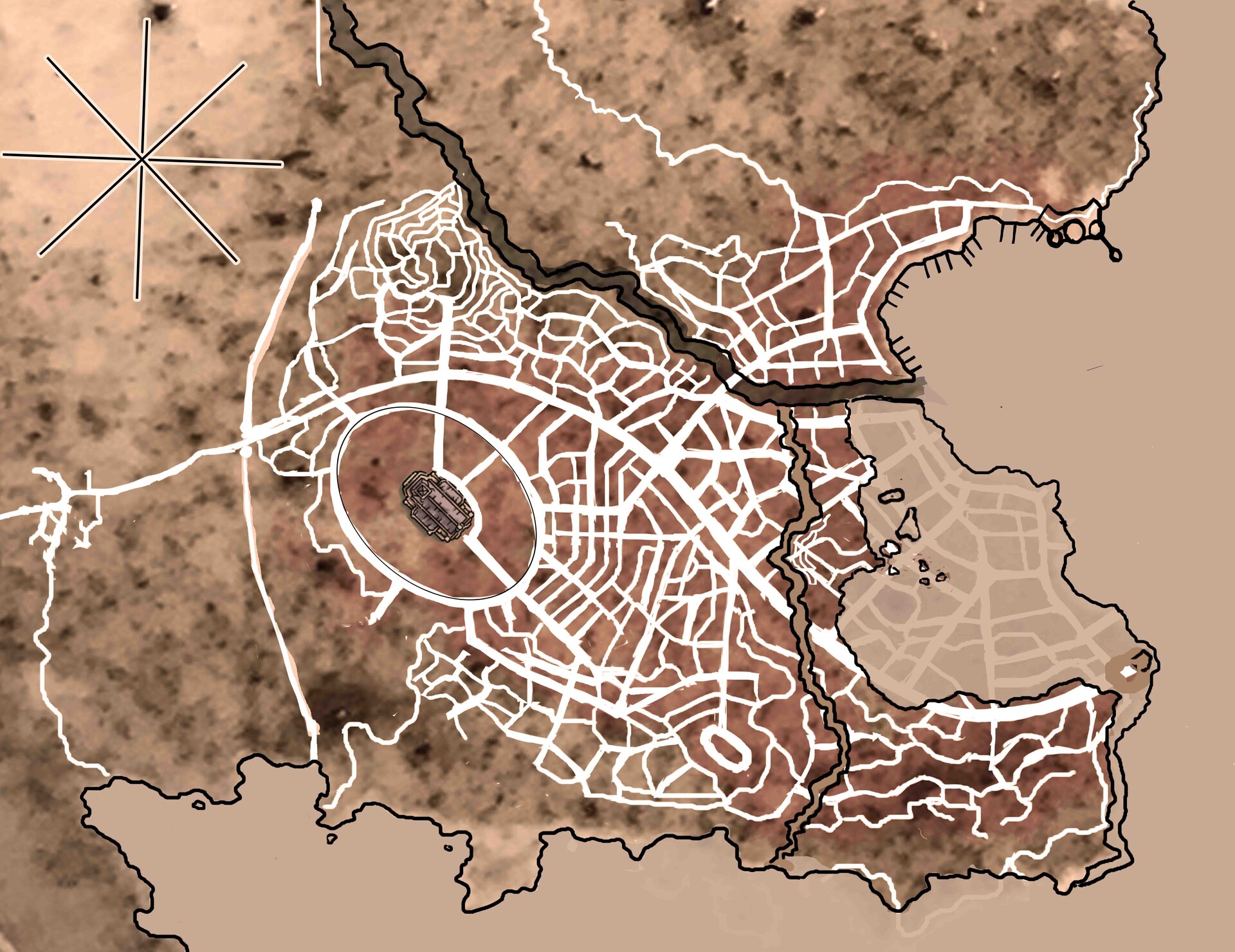
I mapped out roads using the coffee texture as a kind of terrain map. Most of these remained the same through to the final print.


Black and white test- despite me painting in colour, the map was to be printed in greyscale, so it needed to work early in the design process.

Refinement continues.

Another greyscale test, with texture.


To solve the problem of the central book fold, I created plates for the city to be windowed in. This removed the problem of trying to depict the city without it being distrupted by the fold of the book, or losing space by making it smaller.

Testing the city in two frames, greyscale.

I resumed working in colour because it was really enjoyable.


For the surrounding tiles, I took Moroccan inspiration and hand painted designs.

I also created sigils for the four corners, which represent the different planes of existence that interact during the story.

Detail on the roads. I tried to not obsess about pixelation since the map would be printed at A5, and made it as tidy as efficiently possible during my cleanup process.

The book cover, by Lisa Marie Pompilio and Andrew Broyzna